Saudi Arabian cuisine: what people eat where and why food is more than just nourishment
People often discuss Saudi Arabia through Makkah, Medina, Vision 2030, relocation, or business. Much less often, they discuss what people actually eat every day. Yet food is often the fastest way to understand how a country really works.
In one sentence
Saudi cuisine is not one uniform cuisine. It is a regional mosaic shaped by climate, trade, pilgrimage, city life, and hospitality.
Saudi Arabia is not just Kabsa
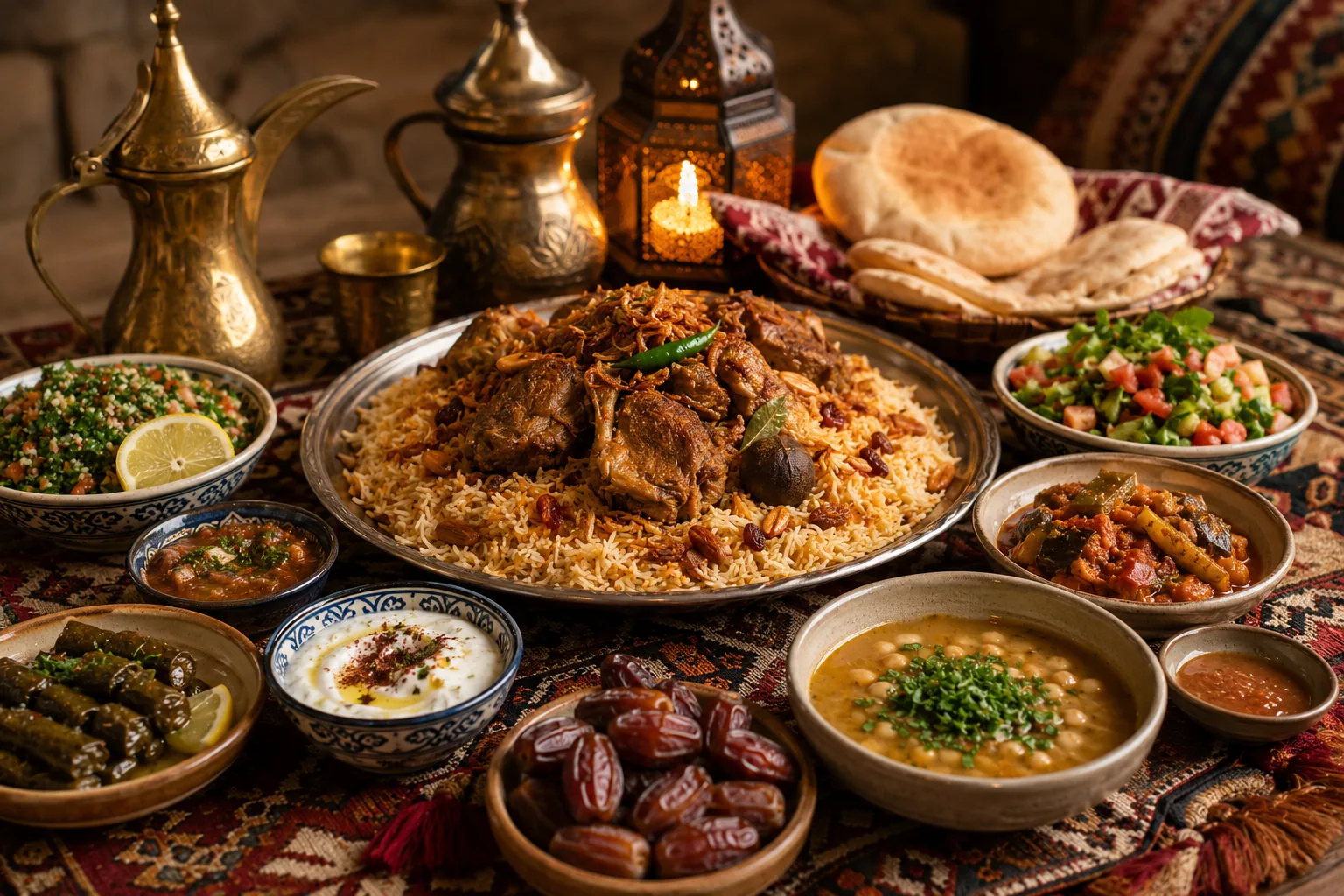
Reducing Saudi food to Kabsa misses the bigger picture. Kabsa is iconic and widely loved, but food culture differs noticeably between Hijaz, Najd, the Eastern Province, the south, and the north.
Kabsa remains essential: a rich rice dish, typically with chicken or meat, layered with spices such as cardamom, cinnamon, saffron, and dried lime. But it is only one part of the story.
Is there a national dish?
Many people still name Kabsa immediately. At the same time, dishes such as Jareesh and Maqshush are now strongly associated with national culinary identity.
Jareesh
Crushed wheat simmered until soft, often with yoghurt, broth, and meat/chicken. Dense, creamy, and deeply filling.
Maqshush
A warm soft batter/flatbread dish, commonly finished with ghee, honey, or date syrup.
What defines the Saudi plate
The core pillars are clear: rice, wheat, bread, dates, meat, dairy, ghee, and spices. Regional context then changes emphasis.
- • Main dishes are often meat-forward (especially lamb/chicken)
- • Wheat and dough dishes carry everyday food culture
- • Dates, yoghurt and ghee remain culturally central
- • Coastal regions introduce stronger fish dynamics
Hijaz: more urban, more open, shaped by trade and Hajj
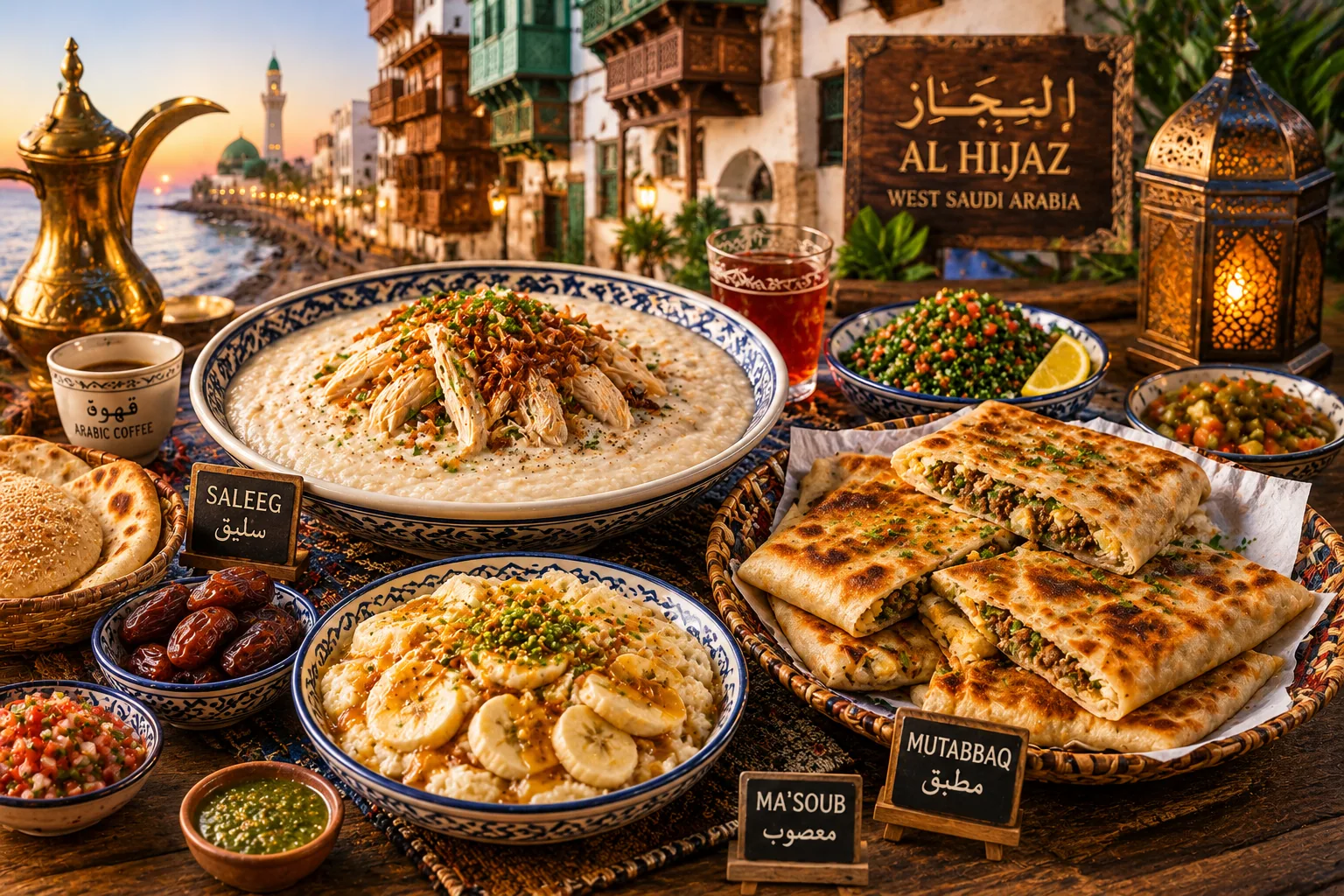
In western Saudi Arabia around Jeddah, Makkah, and Medina, the cuisine often feels more mixed and cosmopolitan. Historically, port routes and pilgrimage routes carried not only people but also techniques, ingredients, and taste preferences.
Well-known Hijazi names include Saleeg, Mutabbaq, and Ma'soub: creamy white rice, savoury pan-fried stuffed dough, and warm sweet breakfast/snack food.
Influences from other countries and regions
Hijazi cuisine especially reflects Yemeni and South Asian influence (India, Pakistan, Bangladesh), alongside broader urban influences from other Muslim food corridors.
| Influence area | Daily food impact | Example |
|---|---|---|
| Yemen / Southern Arabia | Dough-heavy breakfast and street patterns | Ma'soub, Mutabbaq-style variants |
| South Asia | Spice-forward rice and meat approaches | Urban biryani-like frameworks |
| Inland tradition | Storage logic, filling wheat-broth dishes | Jareesh, Qursan, Margoog, Matazeez |
Najd: hearty, grounded, wheat- and date-driven
In central Saudi Arabia, inland climate and storage logic shape the table more strongly. Wheat, dough, broth, ghee, yoghurt and dates naturally dominate.
Qursan, Margoog, Matazeez and Hanini represent this tradition: practical, filling, and deeply family-oriented.
What about Bedouin food culture?
Bedouin-oriented food and regional Saudi cuisine overlap, but they are not identical. In desert logic, durable and nourishing staples were key: dates, grains, meat, yoghurt and buttermilk.
Functional core: less display, more purpose. Large shared dishes support hospitality, dignity, and satiety.
East coast, south, north: food patterns still change
Beyond Hijaz and Najd, local markers remain strong. In the Eastern Province, coastal and rice logic are more visible; other regions hold their own dough, sweet, and spice traditions.
If you want to understand Saudi Arabia, regional thinking matters more than one-size-fits-all assumptions.
Why food is more than just nourishment
Food in Saudi Arabia is tightly linked to hospitality, social respect, and belonging. Arabic coffee with dates is not just a snack ritual; it is a social language.
That is why the table is often not only about taste, but also about trust, relationship-building, and shared identity.
More meat-heavy or more vegetarian?
Main dishes are generally more meat-oriented. But Saudi cuisine is not only meat: wheat, rice, bread, laban, dates, honey and spice structures remain equally central.
So the accurate answer is: meat-forward in many mains, yet broader and more layered than outsiders often assume.
Conclusion
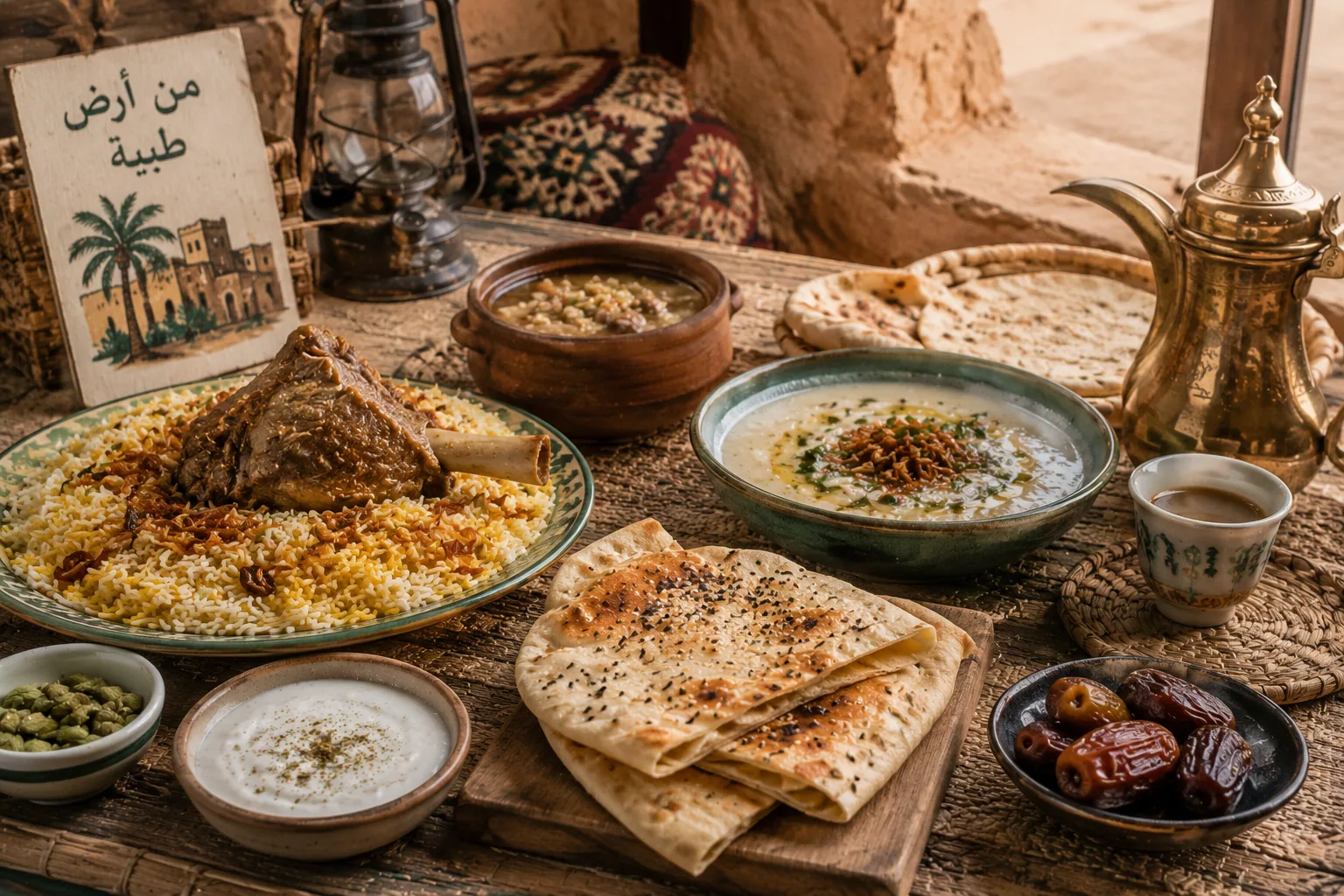
Saudi cuisine is layered: Hijaz and Najd, city and inland, rice and wheat, meat and dates, everyday life and hospitality.
If you ask what defines Saudi food culture, the strongest answer is not one dish but this: a cuisine shaped by region, climate, trade, religion and social practice.
Related reads
- • Saudi cities compared — where daily pace and lifestyle differ by city.
- • 4 legal ways to move to Medina — turning interest into a real relocation plan.
- • Cost of living in Medina — realistic numbers for families.
- • Why Saudi Arabia? — market and society in broader context.
Ready for the next step?
Let's analyze your situation and find the best path for you. Discreet, direct, and based on real experience.
Book an expert call